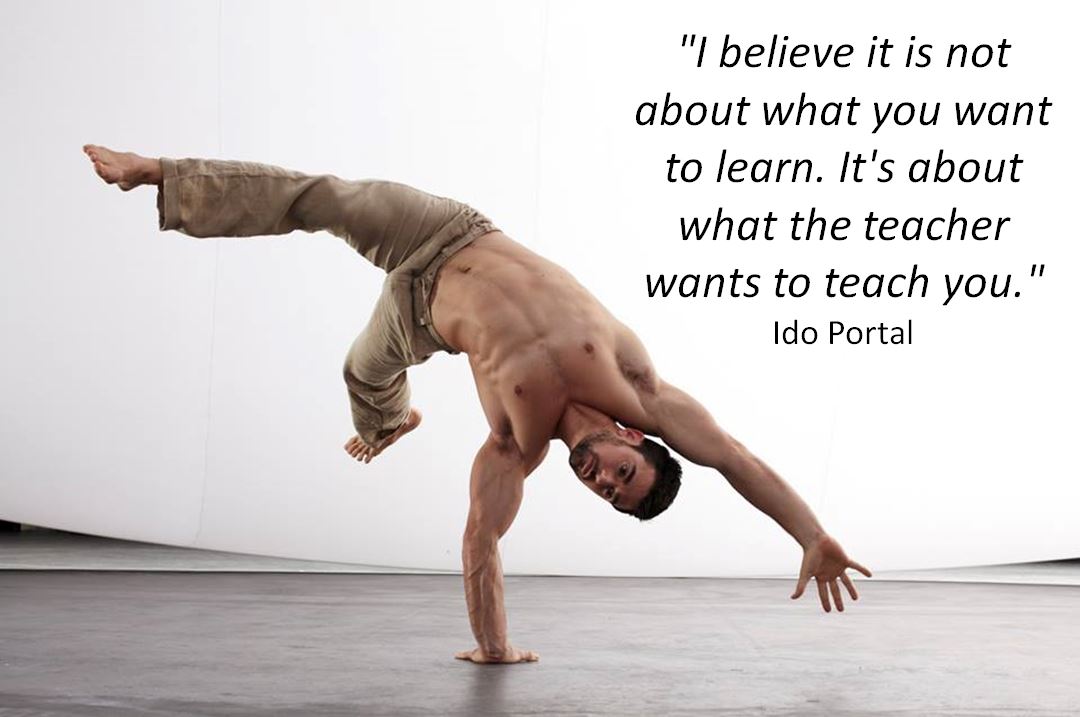
Many attribute the quote: “With great power comes great responsibility” to Spiderman or more specifically his Uncle Ben. Stan Lee wrote the comic, and originally it showed up in a narrative caption. Actually before that, Winston Churchill said, “Where there is great power there is great responsibility…” and even before that: In 1817, member of British parliament […]
Tag: curriculum

Podcasting Pair-a-Dimes 1 – With Wes Fryer at Unplugd12
Description: The very first Podcasting Pair-a-Dimes with Wes Fryer, recorded at #Unplugd12. In this episode, Wes shares some great podcasting tools, then we discuss digital media and digital design, badges, and creating those ‘Ah-ha’ moments in classrooms out of the interaction and creation of openly shared content. Show notes: (Listen Now!) • Wes Fryer: […]
Share:

Standards and Standardization
This image was inspired by Janet Abercrombie’s post Are We Confusing Standards with Standardization? Specifically the section: Clarification 3 If we agree that instructional standardization is unnecessary, we can maintain creativity and passion in a standards-based classroom. But we need to make a few paradigm shifts. Specifically, Look at the standards before we look textbooks or think […]
Share:

The Trap
Being the edu-nerd that I am, I often look at parallels between my experiences inside and outside the world of schools and education, (see Bubble Wrap for another example). Now, two-and-a-half weeks into my Thailand & Vietnam holiday, such parallels are jumping out at me, and I think of them as ‘traps’. It seems that […]
Share:

Caring across the curriculum
Caring across the curriculum Sometimes I get tired of seeing the school day broken into subject-matter based courses. We don’t teach subjects we teach students, and students of all ages engage in a real life that matters across individual fields of study. Watch the video* Miniature Earth: How many different ‘subjects’ can we teach with […]
Share:

The Pedagogy of Play
Dumbfounded by the trite and appalling approach, I did not keep a link to an article I read last week where some American schools were taking away the toys in primary classrooms until test scores improved. Are we in the buiseness of ‘measuring’ or ‘learning‘? Last week I went to a Professional Development session on […]
Share:

Two ‘stuck’ posts, a borrowed post with an added rant, and a few questions.
I have 2 blog posts on the go right now that I can’t get myself to complete. One is on Digital Citizenship which looks at a post by Vicky A. Davis. The concepts I am formulating are in need of some more deep thought, and I don’t know when I will get to it? The […]
Share:

Digital immigrants or digital natives? A discussion of digital competence… A spectrum, not a dichotomy!
Amy Capelle has started a very interesting discussion in Ning’s Classroom2.0 She asks, “Are they really digital natives?” The discussion there is great! Here is my response: – – – – – – – – – – – – – – – – – – – – – – – – – – – – […]
Share:

$3,881.65 for one night’s work
…more on Empathy. Friday night I camped out at the school with 49 students, each raising a minimum of $50- to earn the opportunity to sleep over at the school. We hosted a 24 hour famine to raise money for our Me to We Club… we are fundraising to build a school in Sierra Leone. […]
Share:

Marking What Counts and Reporting on Report Cards
“Just because something can be counted, doesn’t mean it counts, and just because something is difficult to count, doesn’t mean it doesn’t count.” Subbaraman Iyer In my first year of teaching, another first year teacher on my team, Ken Andrews, designed a marking system for Humanities (English and Social Studies combined). In his system students […]
